HOSTED BY
CO-HOSTS
NATIONAL CONSORTIUM PARTNERS

Exhibition & Conference

14 - 17 September 2026

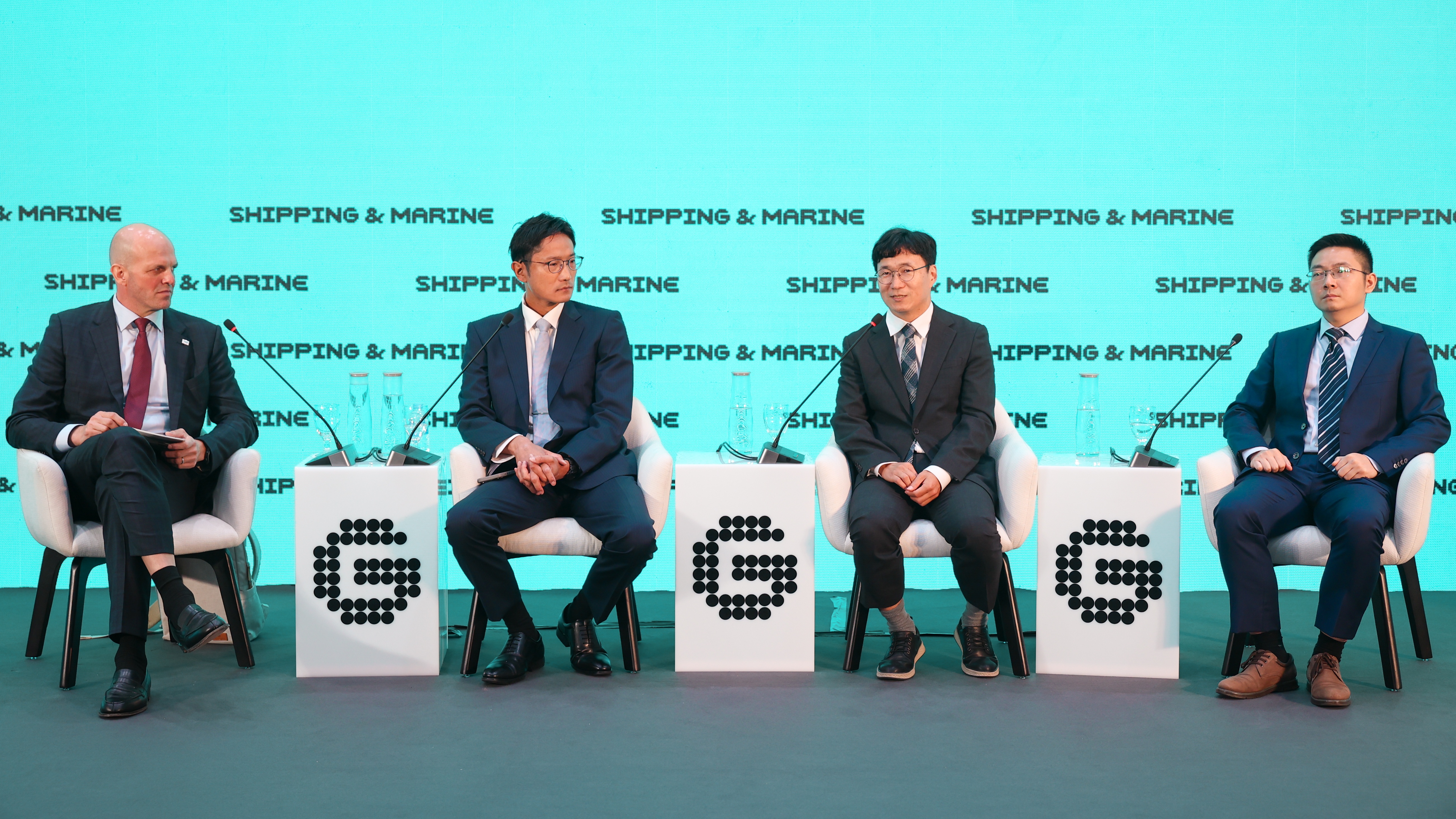
Shipping & Marine Technical agenda

Monday, 14 September | 12:00 - 01:30 Shipping & Marine Technical

LNG bunkering

The future of LNG as a marine fuel: Bunkering, cost, compliance, and continued growth? Junlin Yu, VP & Head - Clean Shipping, Rystad Energy Shipowners are being asked to cut emissions while simultaneously managing sanctions exposure, fuel-supply security, and shifting trade policy. At the same time, the IMO’s one-year postponement of its Net-Zero Framework at MEPC ES.2 (Oct 2025) sharply intensified the uncertainty, delaying firm investment calls across shipowners, fuel suppli... Read More

Monday, 14 September | 02:00 - 03:30 Shipping & Marine Technical

Alternative propulsion: Session 1

From retrofit feasibility to fleet deployment: Optimising wind-assisted LNG carrier upgrades through yard selection and wind-ready strategies Véronique Pastre Maravic, CEO, France LNG Shipping Following an initial feasibility study demonstrating the technical and economic viability of retrofitting LNG carriers with rigid wind-assisted propulsion systems, France LNG Shipping, GAZOCEAN and OceanWings now present the next step toward large-scale deployment. Building on the conclusions of ... Read More

Monday, 14 September | 03:30 - 05:00 Shipping & Marine Technical

Alternative propulsion: Session 2

Technology strategy for DFDE/TFDE LNG carriersDimitris Karageorgopoulos, Project Engineer - Technology, Shell  Shipping faces increasing regulatory, economic, and societal pressure to reduce GHG emissions. Key drivers include the IMO’s revised GHG strategy, EU ETS inclusion of maritime transport from 2024, FuelEU Maritime’s phased GHG intensity limits, expanding carbon pricing, customer expectations for lower carbon supply chains, and demands for environmental accountability. &nbs... Read More

Tuesday, 15 September | 10:00 - 11:30 Shipping & Marine Technical

Ammonia as a fuel: Session 1

Ammonia 2-stroke engines, from concept to commercial application Dr. Sotiris Topaloglou, Deputy VP R&D & Global Head – Testing & Validation, WinGD The upcoming entry into service of the first deep-sea vessels capable of using ammonia fuel during the first half of 2026 marks an important milestone on the road to defossilisation of international shipping. These vessels, powered by WinGD X DF-A engines, enable the use of a carbon-free energy source, capable of being produced e... Read More

Tuesday, 15 September | 11:30 - 01:00 Shipping & Marine Technical

Ammonia as a fuel: Session 2

Advancing decarbonisation: Hybrid electric ammonia-fuelled propulsion for small and medium ammonia carriers and bunkering vessels Mathias Jansson, Head – Gas Carriers, Wärtsilä  The maritime sector is accelerating toward net-zero emissions, with ammonia emerging as a leading alternative fuel due to its carbon-free combustion and growing global production capacity. Recent breakthroughs, such as the Wärtsilä 25—the world’s first commercially available 4-stroke ammonia engine—demonst... Read More

Tuesday, 15 September | 01:30 - 03:00 Shipping & Marine Technical

Ammonia safety

Conversion of an existing LPG/ammonia carrier into an ammonia bunker vesselRene Larsen, Director – Fuels & Technology, ABS  Ammonia is gaining traction as a zero-carbon fuel for deep-sea shipping. Approximately 50 vessels are currently in order with the capability to operate on ammonia. However, the absence of dedicated bunkering infrastructure remains a critical barrier to large-scale adoption. A practical solution involves repurposing existing LPG carriers. The global fleet ... Read More

Tuesday, 15 September | 03:00 - 04:30 Shipping & Marine Technical

H2 shipping & bunkering

Toward the future of commercial liquefied hydrogen utilisation: Development of the 40,000 m³ liquefied hydrogen carrierHaruhiko Tominaga, Manager, Kawasaki Heavy Industries In 2022, Kawasaki Heavy Industries, Ltd. delivered the world's first liquefied hydrogen carrier, Suiso Frontier, demonstrating its capability to develop, design and build ships to carry liquefied hydrogen. Through its gas trial, as well as full-load sea trials and cargo handling tests repeatedly conducted between Japan a... Read More

Wednesday, 16 September | 10:00 - 11:30 Shipping & Marine Technical

CO₂ shipping, storage & terminals

Greensand offshore direct injection CCS project: A world first experience in dynamic positioning CO₂ carriersCarlos Guerrero, Global Market Leader – Gas Carriers, Bureau Veritas Marine & Offshore Green House Gases (GHG) emissions have increased dramatically over the past years. Among them, CO₂ originates from multiple sources such as for instance, ammonia manufacturing, industrial facilities like cement plants, power generation from coal or fossil fuels, steel production, goods manufact... Read More

Wednesday, 16 September | 11:30 - 01:00 Shipping & Marine Technical

Ship to shore interfaces 

Ship to shore compatibility: 25 years on, is it a help or a hindrance? Rahul Kulkarni, Senior Consultant, Poten & Partners Origins of LNG trade where capital intensive infrastructure investments, coupled with long-term take-or-pay contracts meant that it started out as a point-to-point liner trade with security of supply being paramount. LNG Ships were part of the CAPEX for a large LNG export project; and not seen as separate from the venture. Safety considerations and a significan... Read More

Wednesday, 16 September | 01:30 - 03:00 Shipping & Marine Technical

Containment: Session 1

Development of new Guidance Note based on return of experience and shipyard cooperation for type B tanks Philippe Cambos, Director – Oil & Gas Projects, Bureau Veritas Marine & OffshoreBureau Veritas has recently received orders for the Classification of Very Large Ethane Carriers (VLEC) and Floating LNG (FLNG) using independent Type B Cargo Containment systems (CCS), as defined by the International Maritime Organization's (IMO) International Gas Carrier (IGC) Code.  This ... Read More

Wednesday, 16 September | 03:00 - 04:30 Shipping & Marine Technical

Containment: Session 2

Passive vs active approach to BOG management on LNG carriersStephen Brown, Manager – Technology, Shell LNG Carriers have evolved significantly over the last 20 years. This evolution process has 3 main elements, increasing vessel capacity, improved insulation properties of Cargo Containment Systems and the adoption of more thermally efficient machinery types. The combined impact of these elements is that BOR have reduced from 0.15% vol per day to as low as 0.07% vol per day. T... Read More


Member of