Discover the technologies, solutions, and companies shaping the future of energy. Connect with exhibitors across natural gas and LNG, low carbon solutions, electrification, and AI for energy.
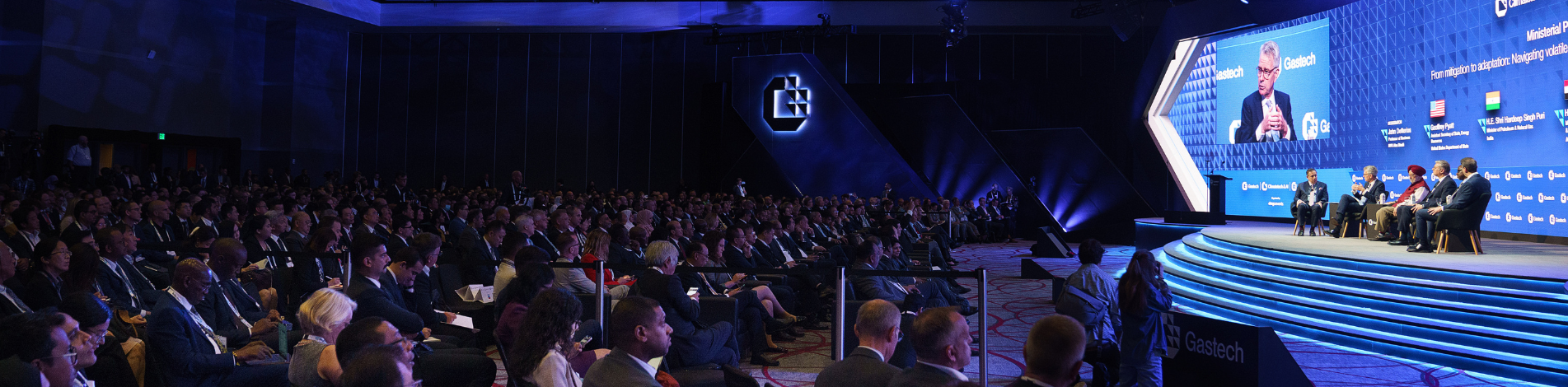
The Gastech Conferences serve as a critical platform for the industry, inspiring policy development, collective action, and knowledge sharing with the potential to drive technical innovation. These conferences are designed to support sustainable economic growth and deliver tangible global energy solutions.
The Global Energy Club is a prestigious, members-only platform uniting ministers, government officials, c-suite executives, and board members from world-leading energy companies.
Discover expert insights, interviews, and analysis from the Gastech community on the technologies, strategies, and innovations shaping the journey to net zero.
Powering intelligence and optimising energy systems.
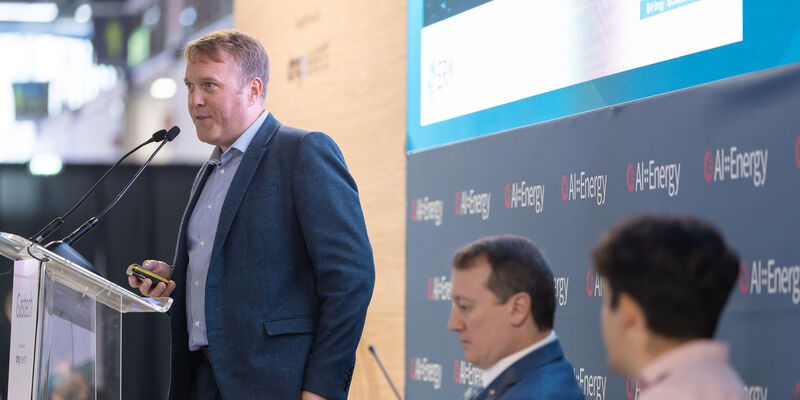
AI is transforming energy, improving efficiency, forecasting and system adaptability, while driving rapid growth in data centres and power demand. Realising its potential requires energy supply, digital infrastructure and investment frameworks to scale together. As electrification accelerates, AI will help balance demand and optimise performance. Gastech convenes technology and energy leaders to explore how AI can enhance operations, strengthen resilience and support more intelligent, responsive energy systems at scale.
Wednesday, 16 September | 13:00 - 13:30Inclusion & Diversity
Women in innovation: Start-ups and founders
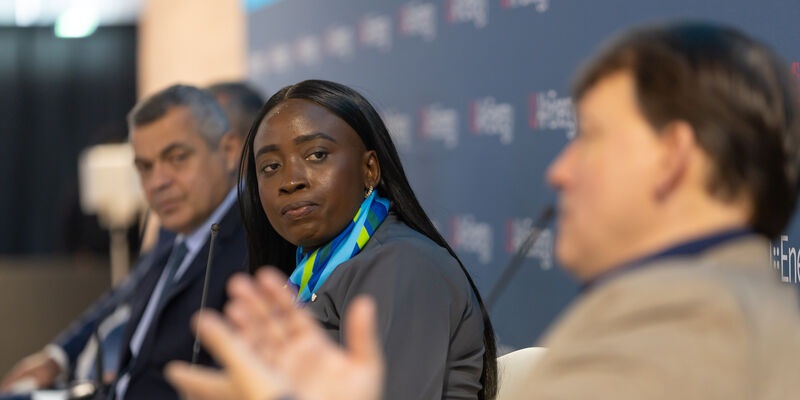
2024 research by PwC showed that, worldwide, women-only founders received less than 2% of venture capital funding. Join our panel of innovators who are forging their careers as founders for an open and honest conversation about the challenges faced, opportunities taken, and success they have built.Speakers will share insights into their career journeys thus far, along with advice for newcomers in the industry.
Tuesday, 15 September | 10:00 - 11:00Supply Chain & Procurement
Digitising supply chains for complexity: Where is AI delivering impact?
As supply chains grow more complex and globally distributed, visibility and forecasting accuracy are becoming central to operational control. AI and advanced analytics are enabling more predictive planning – improving risk monitoring, demand forecasting and multi-tier supplier transparency. Yet deployment remains uneven. Data fragmentation, integration complexity and capability gaps continue to limit scalable adoption, while increased digital connectivity is raising cybersecurity stakes across i... Read More
Tuesday, 15 September | 10:45 - 11:30Low Carbon Solutions Strategic
From waste to value: Using AI to turn methane and flaring into action
Methane emissions and routine flaring represent one of the most immediate opportunities to lower emissions across the energy value chain, and one of the most commercially actionable, with wasted methane equating to wasted energy and lost revenue. The Global Methane Pledge targets a 30% cut by 2030 and combined funding now exceeds US $1bn. AI and digital tools are improving detection, yet translating fragmented satellite, flaring and asset-level data into operational decision-making remains a cha... Read More
Tuesday, 15 September | 10:45 - 11:30Strategic Leadership
Intelligent LNG: Transforming production, markets and shipping with AI
AI is reshaping the LNG value chain, sharpening reliability, cutting costs and driving smarter decisions from production to delivery. As global demand grows, producers and traders face mounting pressure to extract more value from every molecule. At liquefaction plants, predictive maintenance, digital twins and automated process optimisation are cutting unplanned downtime and lifting energy efficiency. At sea, AI-driven fleet routing, boil-off optimisation and weather-adaptive navigation are lowe... Read More
Tuesday, 15 September | 11:30 - 12:15Strategic Leadership
Securing LNG supply through next-generation liquefaction, modularity, regasification and digital optimisation technologies
Next generation liquefaction is emerging as the backbone of LNG competitiveness, unlocking faster delivery, lower costs, and greater flexibility across the value chain. With over 300 bcm of new capacity in development through 2030, global players are turning to advanced engineering to bring projects online at pace. Flexible, small-scale and electrified liquefaction technologies are expanding deployment options while supporting decarbonisation, alongside rapid FSRU rollout to move LNG to market q... Read More
Tuesday, 15 September | 11:30 - 12:15Strategic Leadership
AI, electrification and the grid imperative
Grid infrastructure is now central to competitiveness and AI deployment. Power demand could rise over 70% by 2050, yet transmission is lagging, creating bottlenecks that constrain industry, data centres and cross-border trade. Ageing systems face added risks from extreme weather, cyber threats and decentralisation.With renewables dominating new capacity, flexibility and storage are critical. Building resilient, digital grids will require faster permitting, major investment and close collaboratio... Read More
Tuesday, 15 September | 12:15 - 13:00Low Carbon Solutions Strategic
AI x energy security: The nuclear opportunity
AI-driven electricity demand is reshaping how digital infrastructure is powered, with data centre energy use projected to more than double by 2030 to around 945 TWh [IEA]. Nuclear energy – high-capacity, stable and low carbon – offers a strategic option for meeting continuous AI-driven load. Life extensions of existing plants and growing interest in small modular reactors appeal to policymakers and hyperscalers seeking long-term supply security, while AI-driven safety monitoring and performance ... Read More
Tuesday, 15 September | 13:30 - 14:00Inclusion & Diversity
Women in innovation: AI
According to the UN, there is a consistent underrepresentation of women in global scientific research broadly, and even more so in specific sectors: in the field of AI, only 22% of professionals are women.Join our panel of innovators who are forging their careers in AI for an open and honest conversation about the challenges faced, opportunities taken, and success they have built.Speakers will share insights into their career journeys thus far, along with advice for newcomers in the industry.
Tuesday, 15 September | 16:40 - 17:20Japan Energy Strategic
Powering Japan’s next industrial boom: Meeting energy demand from data centres, semiconductors and advanced technology manufacturing
Japan is experiencing a major boost in energy-intensive industries, with semiconductor plants, AI supercomputing centres, EV hubs and precision-materials facilities growing rapidly. This trajectory is transforming energy demand and the need for high-volume, cost-efficient clean power. Expansion is impacting LNG procurement, power agreements, grid planning and decarbonisation, while opening opportunities in storage, hydrogen and digital optimisation.Future-ready energy systems are needed at compe... Read More
Tuesday, 15 September | 16:00 - 16:30Strategic Leadership
Winning the AI economy: Power, people and performance
Artificial intelligence is becoming a core driver of productivity, industrial strategy and economic growth. Countries are racing to integrate AI while expanding the energy and digital infrastructure needed to support it.This shift is creating new policy challenges. Labour markets are evolving, skills demands are changing and energy use is rising, especially from data-intensive sectors. Governments must manage workforce transitions while ensuring inclusive growth. Closer alignment between energy,... Read More
Wednesday, 16 September | 10:25 - 10:55Future Leaders
AI’s impact on careers in energy: Reskilling, reinvention, and the rise of digital‑first roles
AI is reshaping the energy workforce: creating new roles, transforming existing ones, and rewarding those willing to embrace innovation. Long-term strategies built around upskilling and reskilling, particularly in data interpretation, digital literacy, and analytics, are essential to building resilience and empowering employees across current and future career pathways.Attracting AI-native talent is equally critical. Employees aged 18-29 are more than twice as likely to use AI tools at work than... Read More
Wednesday, 16 September | 14:30 - 15:00Strategic Leadership
Capturing the lost opportunity: Driving global alignment on methane abatement across natural gas supply chains
Over 75% of energy sector methane emissions could be cut with existing, often low-cost technologies. Yet uneven regulation and policy create inconsistent incentives and enforcement across regions. Embedding methane management across operations, from maintenance to procurement and capital allocation, is critical to turning data into action. Linking emissions intensity to market access, financing and buyer requirements can drive change, making methane management a core performance metric across th... Read More
Thursday, 17 September | 10:45 - 11:30Strategic Leadership
Building adaptable future-ready organisations through the strategic integration of an upskilled workforce and advanced technologies
The energy industry faces a talent crisis with two-thirds of new hires replacing retirees between now and 2030 [IEA]. At the same time, AI is driving rapid change to the skills required by nearly all roles, highlighting the need for comprehensive upskilling and reskilling initiatives [McKinsey]. However, many companies are hesitant to incur training costs, fearing workers will leave after learning new skills. To address this challenge, a broader, long-term view prioritising future ene... Read More
Monday, 14 September | 12:00 - 12:30Strategic Leadership
Asia's energy century: Powering growth in a multi-fuel world
Asia sits at the centre of the global energy story. Home to the world's fastest-growing demand centres, the region must balance energy security, affordability and sustainability while navigating geopolitical uncertainty, technological disruption and shifting trade flows. LNG remains critical, but power, renewables, hydrogen, carbon management and AI-driven demand are reshaping investment priorities. As Asia's leading energy companies expand their portfolios and influence, what choices will defin... Read More
Tuesday, 15 September | 14:45 - 15:30Electrification Strategic
Building the system backbone: Resilience, flexibility, and dispatchable power
Grid resilience has moved from technical footnote to strategic priority. The 2026 disruption demonstrated that systems designed for efficiency under stable conditions are poorly equipped for real stress. Meeting the new reliability standard demands a rethink of the balance between variable renewables and firm dispatchable capacity, integrating AI into real-time system management, and reassessing the role of gas as a fast-ramping flexibility resource. Systems that withstand stress combine physica... Read More
Wednesday, 16 September | 11:15 - 12:00Electrification Strategic
The demand surge meets supply reset: AI, industry and the new load frontier
AI infrastructure, industrial electrification, and electric vehicles were already driving unprecedented load growth before the 2026 supply disruption reset the planning environment. Data centre load is outpacing grid connection approvals in many markets. Industrial electrification is creating large, concentrated demand requiring dedicated generation and transmission investment. Electric vehicles are adding distributed load at a pace that challenges existing network management. Understanding how ... Read More
Monday, 14 September | 12:00 - 13:30AI & Digitalisation Technical
AI-powered gas & LNG: Operations & reliability
Technical papers can be accessed here: https://www.gastechevent.com/technical-papers/Transforming equipment reliability by bridging data gaps with AI-driven failure data collection and analysis for the oil and gas industry Akaradech Apornsuvan, Senior Engineering Standard & Capital Project Management Engineer, PTT Exploration and ProductionOrganizations frequently encounter fragmented and unstructured failure records, as well as inconsistent user input. These issues can result in miscla... Read More
Monday, 14 September | 14:00 - 15:30AI & Digitalisation Technical
AI production optimisation
Technical papers can be accessed here: https://www.gastechevent.com/technical-papers/Production optimisation at scale: AI-enabled candidate ranking and execution sequencing for gas deliverability under compression, backpressure, and uptime constraints.Tosin Joel, CEO, ToluaiMature gas and condensate assets often underdeliver against attainable production potential, not because opportunities are absent, but because production optimisation remains constrained by fragmented legacy data, manual scre... Read More
Monday, 14 September | 15:30 - 17:00AI & Digitalisation Technical
AI project delivery
Technical papers can be accessed here: https://www.gastechevent.com/technical-papers/Execution-led digital delivery for LNG projects: From construction readiness to long-term asset valueTony Herceg, VP - Global Construction, Worley LNG projects are being delivered in an environment of increasing complexity. Schedules are compressed, supply chains less predictable, and delivery teams face sustained pressure on safety, productivity, and workforce availability. The industry has invested ... Read More
Tuesday, 15 September | 10:00 - 11:30AI & Digitalisation Technical
Digital twins: Asset & implementation
Technical papers can be accessed here: https://www.gastechevent.com/technical-papers/Industrial intelligence in action: Embedding a lifecycle digital twin operating model at LNG Canada Øystein Hole, Chief Product Officer, FalkorGlobal LNG demand is accelerating, driven by energy security priorities, rising Asian consumption, and Europe’s diversification of supply. At the same time, LNG operators face intensifying scrutiny over carbon intensity, capital discipline, and operational resilience... Read More
Tuesday, 15 September | 11:30 - 13:00AI & Digitalisation Technical
Physics-based digital twins
Technical papers can be accessed here: https://www.gastechevent.com/technical-papers/Digital twin–enabled optimisation of LNG centrifugal pump systems through integrated variable speed controlChristopher Finley, Chief Engineer, Flowserve Corporation Centrifugal LNG pumps operate under variable hydraulic demand across liquefaction, transfer, storage, and regasification facilities. Although pump selection is typically based on maximum design throughput at or near Best Efficiency Point (... Read More
Wednesday, 16 September | 10:00 - 11:30AI & Digitalisation Technical
Agentic AI across project lifecycles
Technical papers can be accessed here: https://www.gastechevent.com/technical-papers/Agentic AI for business process transformation: Lessons from automating proposal generation and FEED engineering Marie Gepel, VP - Digital Solutions, Technip Energies Agentic AI promises to revolutionise business processes by autonomously executing complex, multi-step workflows. AI agents can reason, plan, use tools, and make decisions with minimal human intervention. The question is not whether this t... Read More
Wednesday, 16 September | 11:30 - 13:00AI & Digitalisation Technical
AI: System design to operations
Technical papers can be accessed here: https://www.gastechevent.com/technical-papers/Industrial intelligence: Agentic AI and simulation for end-to-end optimisation of LNG and gas value chainsØystein Hole, Chief Product Officer, FalkorIncreasing asset integration, energy transition pressures, volatile markets and cross-value-chain interdependencies are reshaping how decisions in the LNG and gas industry are made. Yet while data volumes and digital tools have multiplied, operational cognitive load... Read More
Tuesday, 15 September | 14:15 - 15:45AI & Digitalisation Technical
Robotics & monitoring technologies
Technical papers can be accessed here: https://www.gastechevent.com/technical-papers/Autonomous mobile robots for inspection and gas leak detection in energy facilitiesFrancesco Bologna, Senior Robotics Engineer, Baker HughesInspection of energy assets is fundamental to ensuring safety, reliability, and environmental performance, yet it frequently requires personnel to operate in hazardous and potentially explosive environments. This paper presents the results of a robotics inspection programme ... Read More
A selection of speakers include
Explore the AiX programmes
Strategic AixEnergy programme
The Strategic AixEnergy Programme examines how artificial intelligence is transforming the energy landscape - optimising operations, accelerating decarbonisation, and reshaping business models. By uniting AI developers, technology providers, and energy leaders, it drives innovation and governance for a secure, sustainable future.
Technical AixEnergy programme
The Technical AixEnergy Programme delivers practical, technology-focused insights into how Artificial Intelligence transforms energy operations. Sessions cover construction, digital twins, cybersecurity, and risk management, equipping participants with actionable knowledge to drive efficiency, resilience, and a smarter, sustainable energy future.
Join the global energy conversation
By booking your delegate pass, you will gain access to senior decision-makers, market-moving insights, and high-level networking opportunities across the Gastech Conferences.
The AiX Energy Exhibition showcases how artificial intelligence, data and automation are delivering measurable impact across the energy value chain.
The AiX Energy Exhibition will showcase the latest AI-driven technologies transforming energy systems. Visitors can explore innovative solutions, live demonstrations and advanced digital tools designed to optimise operations, improve efficiency and support a more resilient, lower-emissions energy future.
The AiX Energy Spotlight Sessions give business leaders and energy professionals direct insight into how AI-powered solutions are transforming energy operations.
Through real-world case studies and live demonstrations, participating exhibitors have the opportunity to deliver a 15-minute spotlight session, presenting their innovations to a targeted audience decision-makers and buyers - accelerating visibility, engagement and commercial conversations.