

By Rakhi Oli, Governing Board Member, Gastech & Senior Global Leader – Strategy & Business Development; Low Carbon Business Segment, Flowserve Corporation
Global energy architecture is undergoing a profound realignment, driven by two seemingly disparate but deeply interconnected forces: the geopolitical imperative for energy security and the exponential growth of artificial intelligence (AI). At the center of this transformation is the United States, which has rapidly ascended to become the world’s undisputed leader in liquefied natural gas (LNG) exports. As the US leverages its hydrocarbon dominance to reshape global trade and diplomacy, a new domestic challenge is emerging: the insatiable energy appetite of hyperscale data centers. This strategic paper explores the complex interconnections between US LNG exports, global economic dependencies, and the burgeoning energy demands of the AI revolution.
The era of American Energy Dominance
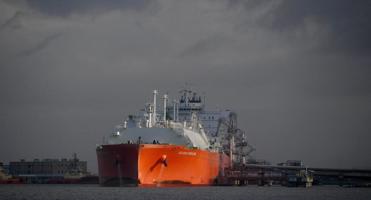
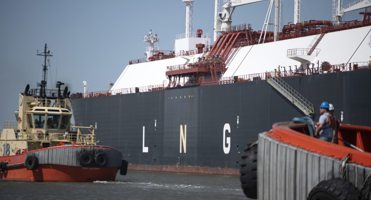
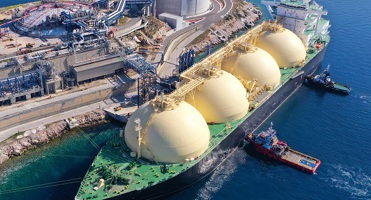
The trajectory of US LNG is a testament to the transformative power of the shale revolution. A decade ago, the United States was a net importer of natural gas. Today, it stands as the world’s largest LNG exporter, surpassing both Australia and Qatar. In 2025, US LNG exports surged to a record 15.0 billion cubic feet per day (Bcf/d), with projections indicating a rise to over 18.1 Bcf/d by 2027 [1]. This remarkable growth is underpinned by abundant domestic reserves, flexible export contracts, and a highly favorable investment climate that has spurred massive infrastructure development along the Gulf Coast.
The strategic implications of this dominance are profound. Under the renewed "Energy Dominance" policy of the Trump administration, the US has explicitly linked its hydrocarbon exports to its broader geopolitical objectives [2]. By lifting export pauses and accelerating the permitting process for new liquefaction facilities, the administration aims to solidify the US’s position as the indispensable energy supplier to the free world. This policy not only enriches domestic producers but also provides Washington with a powerful diplomatic lever to influence global markets and counter the energy leverage of adversarial nations.
Redrawing the map: Europe's new dependency
Nowhere is the geopolitical impact of US LNG more evident than in Europe. Following Russia's invasion of Ukraine in 2022, the European Union (EU) executed a rapid and historic pivot away from Russian pipeline gas. To fill the void, Europe turned to the United States. In 2022, Europe received 69% of all US LNG exports, a dramatic increase from 34% the previous year [1]. This trend has solidified, with the EU sourcing approximately 57% of its total LNG imports from the US in 2025 [3].
While this pivot successfully averted a catastrophic energy crisis, it has birthed a new strategic vulnerability. The EU's growing reliance on US LNG has created a high-risk geopolitical dependency. If current supply deals are fulfilled and European gas demand reduction efforts falter, the bloc could source up to 80% of its LNG imports from the US by 2030 [3]. Furthermore, as part of a July 2025 trade agreement, the EU committed to purchasing $750 billion worth of US energy products by 2028 [3].
This overreliance presents several challenges for Europe. First, US LNG is often the most expensive option for European buyers, contradicting the EU's goal of making energy more affordable. Second, locking into long-term fossil fuel contracts risks undermining the bloc's ambitious Green Deal and climate targets. Finally, it ties European energy security to the domestic political and economic priorities of the United States, leaving the continent exposed to potential shifts in U.S. export policy or domestic supply constraints.
The Asian equation: Balancing security and growth
While Europe has dominated the recent narrative, Asia remains the fundamental engine of long-term global LNG demand. Prior to the Ukraine conflict, Asia was the primary destination for US cargoes, and it is poised to reclaim that position as new global supply waves come online in 2026 and 2027. Countries like Japan, South Korea, and India are heavily reliant on imported energy to fuel their industrial economies and are increasingly looking to the US to diversify their supply away from the volatile Middle East.
The ongoing conflicts in the Middle East have starkly highlighted the risks of relying on energy flows through the Strait of Hormuz. For Asian economies, US LNG offers a critical hedge against these geopolitical shocks. The destination flexibility inherent in US contracts, allowing buyers to redirect cargoes based on market signals, provides a level of agility that traditional, rigid long-term contracts cannot match [1]. As the global LNG market potentially moves toward oversupply in the late 2020s, the US is well-positioned to capture a larger share of the Asian market, further integrating these economies into the American energy orbit.
The LNG wave and global price dynamics
The U.S. LNG expansion is not occurring in isolation. A broader global LNG supply wave is gathering momentum, with North American liquefaction capacity on track to increase from approximately 17 Bcf/d at the end of 2025 to more than 28.7 Bcf/d by 2029 [8]. New facilities such as Plaquemines LNG, Corpus Christi Stage 3, and the anticipated Golden Pass LNG are adding substantial volumes to global markets. According to the IEA, global gas demand growth is set to accelerate to nearly 2% in 2026, driven primarily by China and emerging Asian economies [9].
This surge carries significant implications for global LNG pricing. The influx of new volumes is expected to ease the supply constraints that have kept prices elevated since the 2022 Ukraine crisis, potentially driving spot prices below oil price parity in certain market conditions [9]. For importing nations, this represents welcome relief, offering the prospect of more affordable energy. For exporters, however, it introduces competitive pressures that will test the commercial viability of higher-cost projects.
The pricing architecture of US LNG itself is a strategic differentiator. Unlike the oil-indexed long-term contracts that dominate Australian and Qatari exports, US contracts are typically indexed to the Henry Hub natural gas benchmark, offering buyers a transparent, commodity-linked pricing structure. This, combined with destination flexibility clauses, makes US LNG an attractive and versatile option for buyers seeking to optimize their supply portfolios. However, the recent escalation of Middle East tensions has introduced a new layer of volatility, with disruptions to Strait of Hormuz flows tightening near-term balances and lifting spot prices, paradoxically increasing demand for the supply security that US LNG uniquely offers [10].
The AI wildcard: Data centers and domestic demand
Just as the US cements its role as the global LNG swing supplier, a massive new source of domestic energy demand is emerging: the AI data center boom. The proliferation of generative AI and the construction of hyperscale data centers by tech giants like Amazon, Google, Microsoft, and Meta are fundamentally altering the US power landscape.
Data centers are extraordinarily energy-intensive, requiring constant, reliable baseload power to operate servers and cooling systems. According to the International Energy Agency (IEA), electricity demand from data centers worldwide is projected to more than double by 2030 [4]. In the United States, natural gas is currently the largest source of electricity for data centers, supplying over 40% of their power needs [4].
The sheer scale of this new demand is staggering. Goldman Sachs estimates that incremental data center power requirements will drive an additional 3.3 Bcf/d of new natural gas demand in the US by the end of the decade [5]. This surge is colliding with an aging and constrained electrical grid. With utility connection wait times stretching up to five or seven years in some regions, tech companies are increasingly turning to "behind-the-meter" solutions - building their own dedicated power plants on-site to ensure rapid deployment and reliable operation [6].
The petro-tech buildout
This dynamic has triggered what industry analysts are calling a "petro-tech buildout." The US now leads the world in new gas-fired power capacity in development, with nearly 252 gigawatts (GW) planned, a near tripling from the previous year [7]. Remarkably, more than one-third of this new capacity is slated to directly power data centers on-site [7]. Texas has emerged as the epicenter of this expansion, accounting for nearly a third of the planned US buildout, driven heavily by the state's eager appetite to meet tech industry demands [7].
While hyperscalers have made ambitious commitments to clean energy and net-zero emissions, the reality of the current technological and regulatory landscape dictates that natural gas is the only viable near-term solution to meet their immediate, massive power requirements. Advanced nuclear technologies, such as small modular reactors (SMRs), hold promises for the future but remain years, if not decades, away from commercial deployment at scale [6]. Consequently, data center developers are resorting to creative and sometimes less efficient means to secure power, including utilizing gas turbines originally designed for jet engines or maritime vessels [6].
A new industrial load: The global dimension
The data center energy nexus is not confined to the United States. As hyperscalers expand their global infrastructure footprints, they are replicating the same energy challenge in markets around the world. In the UAE, Microsoft's US$15bn data center investment in Abu Dhabi relies heavily on gas turbines to meet the 99.9% uptime requirements that only dispatchable power can currently deliver. In Southeast Asia, new data center hubs in Singapore, Malaysia, and Thailand are straining local power grids and driving demand for LNG-powered generation. This creates a compelling feedback loop: US LNG exports support the power generation infrastructure in importing nations, which in turn powers the data centers that serve the global AI economy.
This interconnection is particularly significant for emerging economies. For countries in Southeast Asia, South Asia, and Africa that are simultaneously building out their digital infrastructure and expanding their energy access, natural gas and LNG offer a pragmatic bridge fuel. The ability to co-locate gas-fired power generation with data center campuses, leveraging the waste heat for industrial processes or district cooling, represents an efficiency opportunity that is beginning to attract serious attention from both energy companies and technology investors.
The geopolitical dimension of this nexus is equally important. Nations that can attract hyperscale data center investment are gaining significant economic advantages: jobs, tax revenues, and positioning in the AI economy. But this investment is contingent on reliable, affordable energy. Countries that can offer long-term LNG supply agreements, supported by robust regasification infrastructure, are therefore better positioned to compete for this investment. This creates a direct link between a nation's LNG import strategy and its ability to participate in the global AI revolution.
The strategic convergence
The intersection of US LNG export ambitions and the domestic AI energy boom creates a complex strategic paradigm. On one hand, the US possesses abundant natural gas resources capable of supporting both massive export growth and surging domestic power demand. The US Energy Information Administration forecasts that natural gas production will continue to reach record highs in the coming years [2].
However, this dual demand pressure introduces new market dynamics and potential constraints. The rapid buildout of domestic gas-fired power for data centers will inevitably compete for the same natural gas molecules that are destined for liquefaction and export. While the US resource base is vast, localized infrastructure bottlenecks, pipeline capacity limits, and the sheer velocity of demand growth could lead to increased price volatility and regional supply tightness.
Furthermore, the environmental implications of this convergence are significant. The reliance on natural gas to power the AI revolution complicates the broader energy transition narrative. While natural gas is less carbon-intensive than coal, the massive scale of the planned buildout ensures that fossil fuels will remain deeply entrenched in the US power mix for decades to come, potentially challenging both corporate sustainability goals and national climate commitments.
Conclusion
The United States stands at the nexus of two era-defining trends: the geopolitical restructuring of global energy flows and the technological revolution of artificial intelligence. US LNG has become a critical instrument of economic statecraft, providing a vital lifeline to European allies and a secure alternative for Asian economies navigating a volatile world. Simultaneously, the domestic natural gas sector is being called upon to fuel the infrastructure of the future, powering the data centers that will drive the AI economy.
Managing this strategic convergence will require delicate balancing. Policymakers and industry leaders must navigate the tension between maximizing the geopolitical leverage of LNG exports, ensuring affordable and reliable domestic power for the tech sector, and advancing long-term sustainability goals. The decisions made today regarding infrastructure investment, regulatory frameworks, and technological innovation will determine whether the US can successfully sustain its energy dominance while leading the world into the AI age. The interconnections are undeniable; the future of global energy security and technological supremacy are now inextricably linked to the flow of American natural gas.
References
[1] U.S. Energy Information Administration. (2026, February 24). Ten years after first Sabine Pass cargo, U.S. LNG exports are still on the rise. Today in Energy. https://www.eia.gov/todayinenergy/detail.php?id=67224
[2] The White House. (2026, February 24). American Energy Dominance Is Back Under President Trump. https://www.whitehouse.gov/articles/2026/02/american-energy-dominance-is-back-under-president-trump/
[3] Institute for Energy Economics and Financial Analysis (IEEFA). (2026, January 19). EU risks new energy dependence as US could supply 80% of its LNG imports by 2030. https://ieefa.org/resources/eu-risks-new-energy-dependence-us-could-supply-80-its-lng-imports-2030
[4] International Energy Agency (IEA). (2025). Energy supply for AI. Energy and AI Analysis. https://www.iea.org/reports/energy-and-ai/energy-supply-for-ai
[5] CNBC. (2024, May 5). AI could drive a natural gas boom as power companies face surging electric demand. https://www.cnbc.com/2024/05/05/ai-could-drive-natural-gas-boom-as-utilities-face-surging-electric-demand.html
[6] Marketplace. (2026, February 5). More data centers plan to build their own natural gas plants for power. https://www.marketplace.org/story/2026/02/04/more-data-centers-plan-to-build-their-own-natural-gas-plants-for-power
[7] Global Energy Monitor. (2026, January). Betting big on data centers, U.S. now leads world for new gas power development. https://globalenergymonitor.org/report/betting-big-on-data-centers-u-s-now-leads-world-for-new-gas-power-development/
[8] U.S. Energy Information Administration. (2025, October 16). North America's LNG export capacity could more than double by 2029. Today in Energy. https://www.eia.gov/todayinenergy/detail.php?id=66384
[9] International Energy Agency (IEA). (2026, January 23). Growth in global demand for natural gas is set to accelerate in 2026 as LNG wave spreads through markets. https://www.iea.org/news/growth-in-global-demand-for-natural-gas-is-set-to-accelerate-in-2026-as-lng-wave-spreads-through-markets
[10] S&P Global Market Intelligence. (2026, March). Middle East War Disrupts Global LNG Near-Term Outlook. https://www.spglobal.com/market-intelligence/en/news-insights/research/2026/03/middle-east-war-disrupts-global-lng-near-term-outlook